Introduction to RFID tracking in modern agriculture
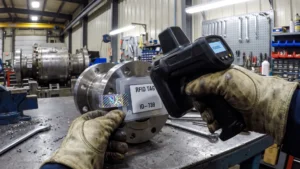
Modernizing a farm requires tools that integrate smoothly without disrupting the daily routines your staff already rely on. Automated tracking technologies provide project managers with a practical way to monitor everything from livestock movements to equipment locations with minimal physical intervention. The system works by attaching small electronic tags to physical assets and reading them wirelessly, which means your staff spend less time on manual inventory and more time on high-value tasks. This shift toward digital data collection ensures your records remain precise, up to date, and readily available for analysis.
How RFID ear tags streamline livestock identification
Identifying individual animals efficiently forms the foundation of modern herd management and veterinary care. Traditional visual ear tags require your team to restrain animals one by one, which causes stress and slows down daily operations. By upgrading to electronic tags, you can capture identifying data wirelessly as livestock walk naturally through your facilities. This approach speeds up handling times, reduces the physical risk to your staff, and ensures every animal is accounted for accurately.
Low frequency and ultra high frequency tags
Low Frequency (LF) tags operate at a short range of up to one meter, which makes them highly reliable in wet or muddy conditions because water and animal tissue do not interfere with the signal. You will need to route animals through narrow alleyways so a handheld scanner or panel reader can scan them individually when using this standard method. Ultra High Frequency (UHF) tags operate at a much longer range, allowing your system to read multiple animals simultaneously as they pass through a wide gate. This faster batch-reading capability suits high-volume operations, though the signals are slightly more prone to interference from dense groups or metal structures.
Reader placement in sorting pens
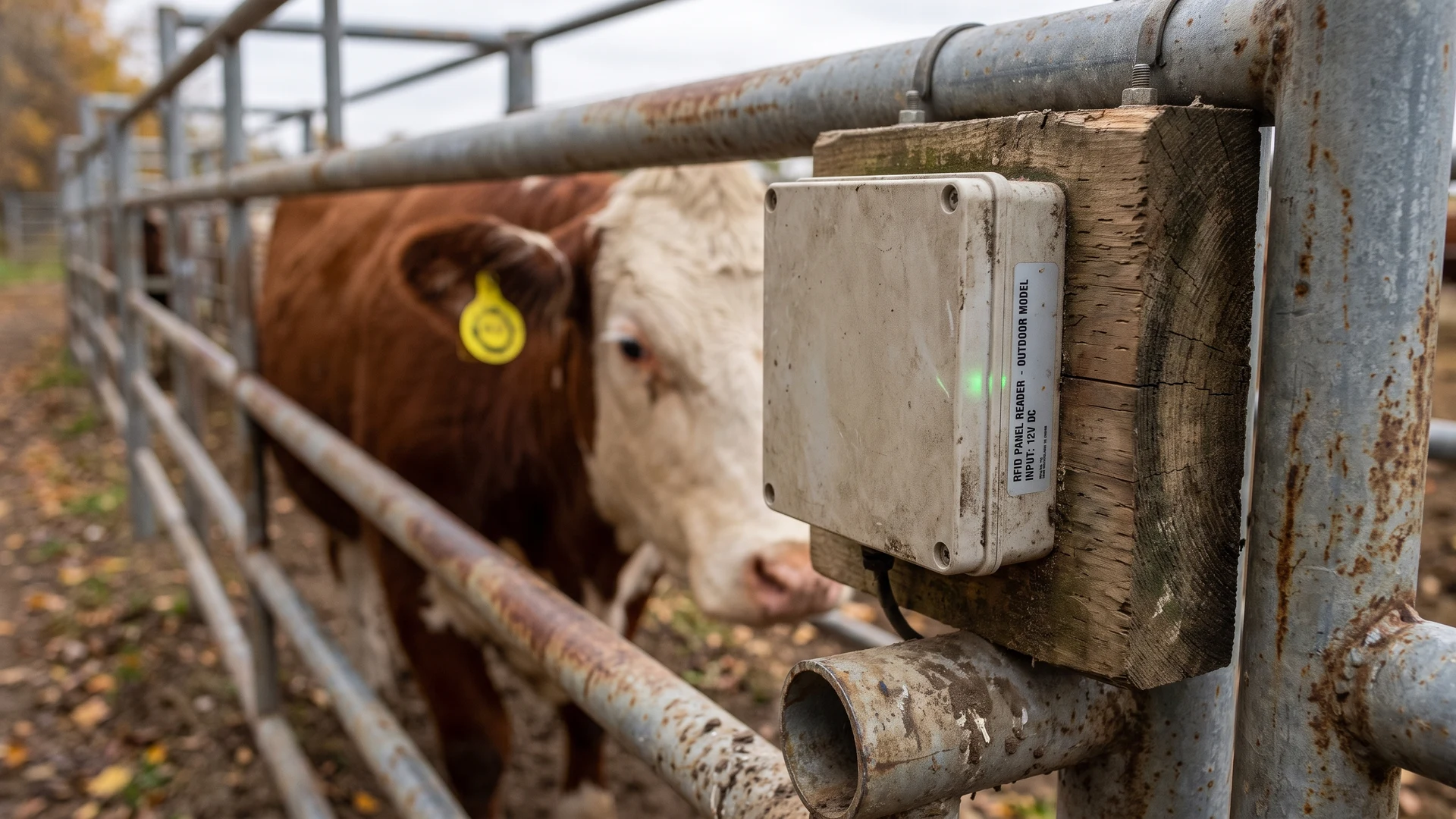
The physical position of your reading equipment dictates the accuracy of your entire tracking system. Placing scanners along single-file chutes yields a near-perfect scan rate because the layout forces animals to pass the antenna one at a time. If you mount panels directly onto heavy steel gates, the metal will absorb the radio waves and severely shrink your read range. You can avoid this interference by using heavy-duty plastic or wooden standoffs to keep the reading hardware isolated from metal frames.
Connecting field data to farm software
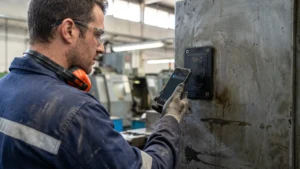
Capturing tag numbers in the field only provides value when that information flows directly into your Farm Management Information System (FMIS). Handheld scanners and fixed portals transmit their collected data wirelessly via Bluetooth, Wi-Fi, or cellular networks to a central database. Application Programming Interfaces (APIs) map the incoming tag numbers to specific animal profiles, automatically updating weights, ages, or medical histories. This seamless connection means your team always looks at real-time information without ever transcribing numbers from a muddy notebook.
Tracking animal health and vaccination records
Linking a unique digital identifier to each animal transforms how your team manages veterinary care and medication protocols. When your staff administer vaccines or treatments, an automated scanner instantly pulls up the Electronic Veterinary Medical Record (EVMR) for that specific animal. This immediate verification prevents wrong-patient errors and ensures you never accidentally give medication to the wrong cow or sheep. You can also track exact dosages, multi-dose schedules, and specific drug types without relying on error-prone paper logs or human memory.
Managing health at the individual level also protects your operation during disease outbreaks or standard regulatory checks. If a specific vaccine batch fails, your digital records allow you to pinpoint and quarantine only the affected animals rather than locking down an entire herd. The system automatically tracks critical meat or milk withdrawal windows, preventing you from sending an animal with active drug residues into the food supply chain. Maintaining a complete lifetime immunization history supports better genetic selection and provides irrefutable proof of health for buyers.
Automating compliance reporting for agricultural regulations
Meeting government traceability and food safety regulations requires highly accurate documentation that proves your operational compliance. Automated data collection replaces stressful manual audit preparation with a continuous, tamper-proof digital trail of every movement and treatment on your farm. By routing your field scans through a structured data pipeline, you can generate ready-to-file compliance reports with minimal manual effort. The process follows a logical sequence that transforms raw radio signals into validated regulatory documents.
- Physical scanning and edge filtering: Your stationary portals or handheld devices capture unique electronic codes as livestock or produce pallets pass through a detection zone. The internal software on the reader immediately filters out duplicate reads caused by an animal lingering near the antenna. This filtering ensures your system only records a single, clean event for each tag. Sending only clean data forward prevents your database from becoming cluttered with redundant tracking events.
- Database matching and context attachment: The filtered data travels wirelessly to your central farm management software where it matches against your master inventory database. The software instantly attaches vital operational context to the scan, such as the age of the animal, origin pasture, or recent medical treatments. Connecting the raw scan to its historical background gives your team a complete picture of the asset. This enriched data provides the foundation needed for strict regulatory oversight.
- Rule validation and anomaly detection: Before generating any official documents, the software runs your enriched data through a compliance validation engine to spot errors. It automatically checks for time conflicts, such as an animal moving to transport before a medical withdrawal period expires. The system flags these discrepancies immediately so your team can correct the issue before the product leaves the farm. Catching violations in real time protects your operation from costly regulatory fines.
- Format conversion and report generation: The validated records are translated from your internal database format into the exact structure required by agricultural authorities. The system maps your data fields directly to official government standards to ensure complete compatibility. You can then download the finalized traceability documents or have your software submit them directly through integrated government portals. This final step turns weeks of administrative work into a simple, automated export process.
Managing farm equipment and maintenance schedules
Expanding your digital tracking beyond livestock allows you to monitor the location and health of your tractors, sprayers, and heavy attachments. Modern agricultural machinery often includes built-in telematics units or aftermarket sensors that track engine hours, fuel consumption, and hydraulic pressure in real time. These sensors feed data directly into predictive maintenance models that alert your mechanics to upcoming service needs before a catastrophic breakdown occurs. Fixing small mechanical issues early reduces wear and tear, which significantly improves the lifespan of your most expensive farm assets.
Continuous tracking also helps you optimize how your team allocates equipment across different fields during busy seasons. Global Positioning System (GPS) logs show exactly how long each machine has worked, preventing your operators from overworking specific units while others sit idle. You can balance the mechanical strain across your entire fleet to ensure uniform depreciation and maximize your return on investment. Furthermore, setting up digital boundaries protects your high-value machinery from unauthorized use or theft by alerting you instantly if equipment leaves the property.
Monitoring crop logistics from field to storage
Managing the flow of harvested crops requires speed and precision to prevent spoilage and misplacement during peak seasons. Automated data capture replaces manual line-of-sight barcode scanning with radio waves that read dozens of items simultaneously. This bulk scanning capability accelerates your intake processes without requiring direct physical handling of every single crate. Tracking your produce from the moment it leaves the field ensures total visibility across your entire agricultural supply chain.
Tagging harvest bins and pallets
The logistics process begins by attaching durable, weather-resistant electronic tags to your harvest crates, totes, or entire shipping pallets right in the field. These specialized tags are built to withstand outdoor agricultural environments, surviving heavy rain, mud, and extreme temperature fluctuations. Applying the tags at the source creates a unique digital identity for each batch of crops before it ever reaches your processing facility. This early identification links the exact field origin and harvest date directly to the physical container.
Tracking movement through storage facilities
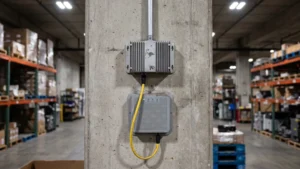
As your harvest trailers and forklifts arrive at the processing center, they pass through automated reading portals installed at your dock doors. These fixed antennas instantly log the arrival time and quantity of goods without requiring the driver to stop and scan paperwork. The system continues to track the pallets as workers move them into cold storage or specific warehouse zones. Capturing this movement automatically gives your project managers a real-time map of where every batch resides within the facility.
Updating inventory records automatically
Every time a portal reads a tagged pallet, the captured data flows directly into your Enterprise Resource Planning (ERP) software. This seamless integration updates your stock counts, storage locations, and batch origins instantaneously across your entire network. Removing manual data entry from this process eliminates duplicate tallies, missed inventory counts, and simple human keying mistakes. Maintaining perfectly accurate digital records simplifies quality control and ensures you can trace any food safety issues back to the exact field of origin.
Steps for deploying an agricultural RFID system
Deploying a digital tracking network requires careful planning to ensure the hardware and software align perfectly with your daily routines. You should approach the implementation in distinct phases, focusing first on mapping your existing processes before purchasing any physical equipment. The platform at RFID & NFC serves as a neutral educational resource to help you navigate these objective implementation steps without pushing proprietary solutions. Following a structured roadmap helps your project team deliver a reliable system that works seamlessly from day one.
- Process mapping and bottleneck identification: Begin by documenting exactly where your current data collection processes break down or slow operations. You might discover that manual stock counts cause delays at the loading dock, or that handwritten veterinary logs lead to missing vaccination records. Identifying these specific friction points allows you to define exactly what the new technology needs to solve. A clear understanding of your pain points prevents you from investing in unnecessary features.
- Hardware selection and environmental testing: Choose tags and antennas based on the physical realities of your farm, paying close attention to moisture, metal, and animal movement. You should run small-scale field tests to evaluate read ranges and see how the equipment handles mud or extreme weather. Testing different mounting angles and reader heights ensures you achieve a near-perfect scan rate before scaling up. This hands-on validation guarantees the hardware will perform reliably under actual working conditions.
- Software integration and data mapping: Connect your reading equipment to your central farm management database to ensure information flows automatically. Your technical team must map the incoming tag numbers to the correct data fields, such as animal profiles or equipment maintenance logs. You should verify that the system updates records correctly and triggers the appropriate alerts without requiring manual intervention. A clean digital integration forms the backbone of a successful tracking deployment.
- Staff training and phased rollout: Introduce the new system to your workers gradually, starting with a single barn or specific vehicle fleet. You must train your team on how to handle the hardware properly and how to interpret the data on their mobile devices. Gathering feedback during this initial phase allows you to adjust workflows and fix minor technical bugs before expanding. A phased approach builds confidence among your staff and ensures a smooth transition across the entire farm.
Preparing your farm for automated data collection
Transitioning to automated data capture represents a significant operational shift that goes far beyond simply installing new hardware. You must evaluate your existing workflows and ensure your database is clean, organized, and ready to receive real-time information. Taking the time to prepare your digital infrastructure sets the stage for a smooth deployment that delivers immediate practical value. When you map your processes carefully and choose the right tools for your specific environment, your farm gains a powerful system for continuous improvement.
What is the practical difference between low frequency and ultra high frequency RFID ear tags?
Radio Frequency Identification, or RFID, uses ear tags that a reader detects at a distance. Low frequency tags offer short read range yet stay reliable around water, mud, and metal for close handling. Ultra high frequency tags reach longer distances and support faster group reads, though placement and interference matter.
Where should I mount RFID readers in chutes and pens to get reliable reads?
Mount RFID readers along single file chutes at average ear height so each animal passes through the strongest read zone. Tilt panels slightly toward the approach to lengthen read time. Keep readers off metal gates using plastic or wood spacers. Control flow speed and avoid wide openings that cause crowding.
How do RFID readers send data into my farm management software?
The RFID reader captures a tag identifier with time and location, stores it briefly, then sends it to your farm management software by wireless connection or USB cable. The software matches identifiers to animal records through an Application Programming Interface, so updates, alerts, and reports happen automatically.
How does RFID improve vaccination records and regulatory traceability?
RFID gives each animal a unique, permanent identity, which links every dose, schedule, and withdrawal period to the right record. You avoid double dosing and missed follow-ups, and movement logs become verifiable. During audits or disease tracing, you can produce accurate histories without rebuilding paper files.
How does RFID keep harvest inventory updated from field to storage?
Attach durable RFID tags to bins, totes, or pallets in the field, then place fixed RFID readers at gates, dock doors, and cold room entries. As loads pass, readers capture tags at once without line of sight and inventory software updates counts, origins, and storage locations in real time.