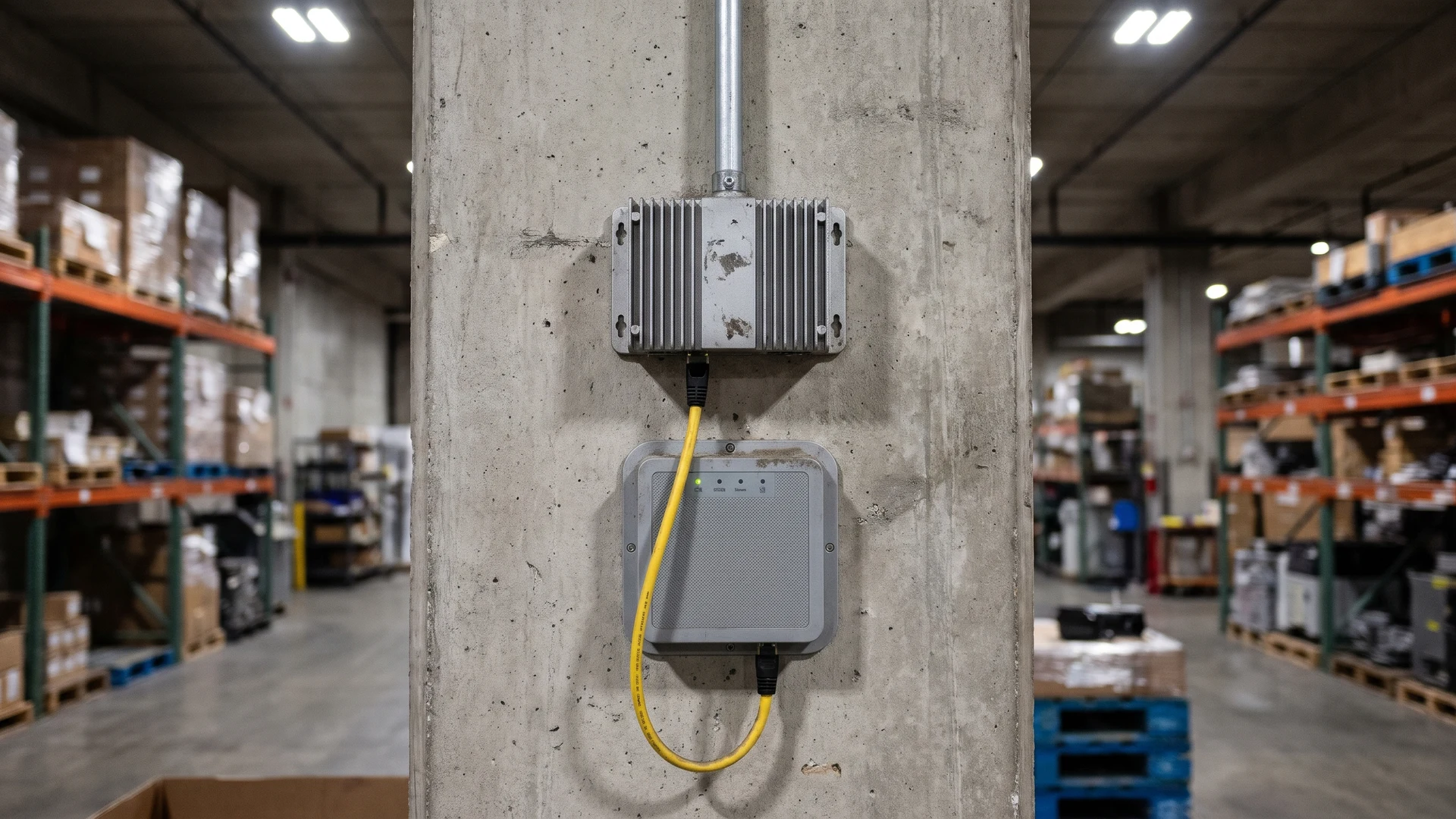
Why securing the communication link matters
Standard network security measures rarely provide enough protection for connected hardware operating at the edge of your facility. When your physical readers capture data, that information must travel across open spaces or shared networks before it reaches your secure servers. If you leave this communication link unprotected, unauthorized users can intercept the transmissions and gain access to your core business systems. Framing this security challenge as an approachable implementation step empowers your project managers to take action rather than waiting for Information Technology (IT) specialists to intervene. You can protect your sensitive data landscape by focusing on how the hardware communicates with the rest of your environment.
Tracing the data journey from physical scan to digital record
Mapping out exactly where your data travels helps your team identify potential interception points before they become active threats. The journey begins the moment a physical tag comes into contact with your reader and triggers an initial data capture. From that reader, the information moves through local cables or wireless signals to a localized gateway device that processes the raw input. This gateway then formats the data and transmits it across your wider corporate network toward your central database. Visualizing this specific flow gives your implementation leads a clear mental model of the system architecture.
Once the data enters your corporate network, it often shares pathways with everyday office traffic and external internet requests. This shared environment creates opportunities for compromised devices to monitor or alter the information as it moves toward the final digital record. Understanding these transit routes allows you to plan targeted security updates that fit cleanly within your existing infrastructure. Your team can confidently apply specific controls at the reader, the gateway, and the server levels when they know exactly how the data moves between them. Building this foundational map ensures that your security measures align perfectly with your daily operational flows.
Protecting your systems with network segmentation
Isolating your reader traffic from the rest of your enterprise network contains potential breaches and limits their impact. Network segmentation divides your larger architecture into smaller, isolated zones that restrict how different devices communicate with one another. If an attacker compromises a single reader, this isolation prevents them from reaching your core financial or operational databases. Your project managers can guide internal network teams to implement these architectural decisions effectively. This approach turns a massive security challenge into a series of manageable boundary controls.
Creating dedicated virtual local area networks
A Virtual Local Area Network (VLAN) groups your connected devices into a dedicated logical subnet regardless of their physical location. Assigning your readers to an exclusive VLAN separates them from corporate data, guest networks, and general Internet of Things (IoT) devices. Because devices on separate VLANs cannot communicate directly at the hardware level, your reader traffic remains safely contained within its designated group. This logical boundary ensures that discovery packets and status updates never accidentally spill into your main corporate user network. Your network administrators simply configure the switch ports connected to the physical readers to restrict access exclusively to this secure segment.
Restricting traffic with internal firewalls
Internal firewalls sit between your segmented networks to inspect and control the data moving between them. These security barriers allow administrators to enforce granular Access Control Lists (ACL) that restrict communication strictly to authorized endpoints. The firewall rules typically permit only specific traffic types, such as the exact data ports used by your inventory middleware. By dropping unsolicited traffic and blocking readers from initiating connections to employee workstations, you limit the blast radius of any potential exploit. Advanced stateful firewalls also examine the data payloads to block anomalous behavior and ensure that only legitimate commands pass through the network.
Using proxy servers for external data routing
A proxy server acts as an intermediary gateway that handles all inbound and outbound traffic between your internal devices and the public internet. Instead of your hardware connecting directly to external cloud services, the proxy receives the data and masks your internal network structure. This setup conceals your private Internet Protocol (IP) addresses and makes it extremely difficult for external attackers to map out your hardware vulnerabilities. The proxy server enforces strict access control lists to ensure that only authorized external entities can communicate with your connected systems. For older hardware that lacks processing power, the proxy also steps in to apply modern encryption before sending the data over the open internet.
Setting up mutual authentication between devices
Standard network connections often only require the server to prove its identity, but your sensitive hardware needs a two-way verification process. Mutual Transport Layer Security (mTLS) ensures that both the reader and the backend server cryptographically verify each other before exchanging any sensitive information. This mutual verification prevents unauthorized devices from connecting to your backend and stops your readers from sending data to spoofed servers. Translating this complex cryptographic concept into a sequential deployment plan helps your implementation leads execute the rollout smoothly. You can establish this trusted environment by following a clear, step-by-step process for deploying digital certificates.
- Generate the cryptographic keys: The process begins when your hardware device generates a unique cryptographic key pair consisting of a private key and a public key. The device securely stores the private key within its internal hardware module and never allows this secret to leave the system. This hidden key serves as the foundation for the device proving its identity during all future network interactions. Generating these keys directly on the hardware ensures that no one can intercept the private credentials during the manufacturing or deployment phase.
- Create the certificate signing request: Once the keys exist, the device bundles its public key with identifying metadata like its serial number or physical address. It packages this information into a Certificate Signing Request (CSR) and transmits it to your central enrollment server. The backend system receives this request and uses an out-of-band mechanism to verify that the specific piece of hardware is authorized to join the network. This verification step prevents rogue devices from successfully requesting an identity profile on your secure enterprise systems.
- Issue and install the digital certificate: After verifying the device identity, your internal Certificate Authority (CA) signs the request to create a valid digital certificate. The server sends this officially signed certificate back to the hardware device to complete its digital identity profile. The device installs the certificate alongside its hidden private key, which prepares it for secure communication with your backend. This installed certificate acts as an unforgeable digital passport that the device will present every time it attempts a new connection.
- Execute the mutual verification handshake: When the device initiates a connection, it presents its digital certificate to the server while demanding the server present its own certificate in return. The server verifies the device signature, and the hardware uses its private key to solve a cryptographic challenge sent by the server. This challenge proves that the device actually owns the certificate rather than simply presenting a stolen public file. Only after both endpoints successfully complete this two-way verification do they open a secure and encrypted communication channel.
Selecting encryption protocols for data in transit
Choosing the right encryption method protects your financial and identity data from interception as it moves across your facility. Every piece of hardware possesses different processing capabilities, meaning you cannot apply a single cryptographic standard across your entire operation. You must evaluate the power constraints, memory limits, and network architecture of your specific environment before selecting a security protocol. Cutting through the technical jargon helps your decision-makers choose practical encryption methods that integrate seamlessly with your existing IT backbone. The right selection balances robust data protection with the physical realities of your deployed hardware.
Transport layer security for web application programming interfaces
Modern web communications rely heavily on Transport Layer Security (TLS) to establish encrypted tunnels between client devices and central servers. When your hardware interacts with an Application Programming Interface (API), this protocol scrambles the payload to protect sensitive data like authorization tokens and JSON files. The handshake process negotiates a shared session key and attaches a cryptographic signature to every packet to prevent unauthorized tampering in transit. This method provides exceptionally strong confidentiality and integrity for devices that possess enough processing power to handle the required cryptographic math. Implementing this standard ensures that your API requests never travel in plain text across your local or public networks.
Encrypted message queuing telemetry transport for lightweight devices
Many low-power edge devices lack the processing capabilities required to sustain a full secure handshake without experiencing severe performance drops. For these constrained sensors, Message Queuing Telemetry Transport (MQTT) offers a lightweight alternative that minimizes the burden on the hardware. When running this protocol over a secure connection, the system encrypts the packet headers and payloads using highly optimized symmetric ciphers. This approach allows battery-powered hardware to transmit sensor readings and inventory updates securely without draining their limited energy reserves. You can safely deploy these lightweight encryption methods to maintain data integrity across massive fleets of simple operational devices.
Virtual private network tunnels for remote sites
When you operate remote manufacturing plants or isolated warehouses, you need a way to connect those distant local networks to your central corporate data center. A Virtual Private Network (VPN) creates a secure site-to-site tunnel over public internet lines to link these environments safely. The gateway encapsulates all the packets generated by your industrial controllers and hides the original network addresses from external view. This tunnel scrambles the data using robust cryptographic algorithms, which renders your operational telemetry completely unreadable to anyone intercepting the traffic. Relying on these site-wide tunnels protects all the legacy and modern devices at a remote location simultaneously without requiring individual hardware upgrades.
Handling legacy readers and older infrastructure
Upgrading your security posture rarely means you can replace all your existing physical equipment at the same time. Many older readers and legacy gateways simply do not possess the computational power required to support modern encryption protocols natively. Acknowledging this reality allows your implementation team to focus on practical workarounds rather than waiting for an impossible hardware refresh budget. You can build a pragmatic bridge to better security by placing protective intermediary devices in front of your vulnerable legacy systems. This strategy secures your older infrastructure while keeping your daily inventory and access flows running without interruption.
One effective approach involves routing the unencrypted traffic from your legacy readers into a local secure proxy or specialized hardware gateway. This intermediary device absorbs the incoming raw data and applies the necessary heavy encryption before sending the information over your corporate network. Your team can also isolate these older devices on highly restricted network segments that only permit communication with the designated proxy server. These compensating controls ensure that even if an older reader lacks built-in security, it cannot expose your wider network to external threats. Taking these steps empowers you to maintain your current operational investments while simultaneously closing dangerous security gaps.
Establishing a monitoring and response process
Deploying strong encryption and authentication creates a solid foundation, but maintaining that security requires active and continuous oversight. You need a sequential operational strategy to detect unauthorized access attempts and respond appropriately when anomalies occur. Reinforcing the ongoing nature of system management prevents your team from adopting a dangerous set-and-forget mentality after the initial rollout. Giving your project managers a concrete plan ensures they can maintain the health of the network long after the hardware goes live. You can build a reliable monitoring environment by implementing a few structured operational steps.
- Baseline your normal network traffic: Before you can identify suspicious behavior, your team must understand exactly what normal operations look like across your facility. You should record the standard communication patterns between your physical readers, local gateways, and central servers during peak business hours. This baseline documentation reveals the typical data volumes, connection frequencies, and expected communication paths for every piece of hardware on your floor. Having this clear picture allows your monitoring tools to spot unusual spikes or unexpected connection attempts with high accuracy.
- Deploy automated anomaly detection: Reviewing network logs manually consumes far too much time and often allows fast-moving threats to slip by unnoticed. You can connect your segmented networks to an automated monitoring system that constantly compares live traffic against your established baseline. When the system detects a reader attempting to access an unauthorized database or sending an unusually large payload, it triggers an immediate alert. This automated oversight ensures that your IT staff receives prompt notifications the moment a device behaves outside of its approved parameters.
- Create an immediate isolation protocol: When an alert triggers, your response team needs a predefined method for containing the threat before it spreads. Your network administrators should configure your switches to automatically quarantine any suspicious reader by moving it to an isolated containment network. This rapid isolation cuts the compromised hardware off from your central servers while leaving the device powered on for forensic investigation. Establishing this protocol in advance removes the guesswork and hesitation that often paralyzes teams during an active security event.
- Establish a certificate revocation procedure: If a physical reader is stolen or permanently compromised, you must immediately invalidate its digital identity to protect your backend. Your security administrators must maintain a clear process for adding the compromised device to a central revocation list. Once the backend server registers this revocation, it will automatically reject any future connection attempts utilizing those specific cryptographic keys. Managing this lifecycle diligently ensures that missing or compromised hardware cannot be repurposed by attackers to infiltrate your secure infrastructure.
Planning your security rollout without disrupting operations
Securing your communication links requires careful scheduling to ensure your inventory tracking and access controls remain fully functional during the transition. You can achieve a smooth deployment by upgrading your architecture in phased segments rather than attempting a facility-wide overhaul all at once. Start by configuring your isolated networks and proxy servers in the background, then migrate small groups of readers during your lowest operational hours. Relying on RFID & NFC as a trusted educational resource empowers your implementation leads to confidently take action on these critical upgrades. Following this methodical roadmap leaves you with a highly secure environment that supports your business goals without causing unnecessary downtime.
What is the right way to segment RFID reader traffic on my network?
Create a dedicated Virtual Local Area Network VLAN for each RFID reader group so their traffic stays isolated. Attach every reader to an access switch port in that VLAN and force all communication to cross a routed firewall. On that boundary, enforce Access Control Lists ACLs that allow only the specific backend addresses and ports your team requires, and deny everything else.
How do I set up mutual authentication between readers, gateways, and the backend?
Use mutual Transport Layer Security mTLS so both the reader and the backend prove identity with digital certificates. Generate a unique key pair on the device, create a Certificate Signing Request CSR, have a trusted Certificate Authority CA issue it, then install the certificate with the private key. Automate renewal and enable rapid revocation through a Certificate Revocation List CRL so a lost or compromised device is blocked immediately.
How should I choose an encryption approach for data in transit?
Choose Transport Layer Security TLS for point to point connections between a reader or gateway and your application, ideally with mutual certificates. Use Message Queuing Telemetry Transport MQTT over TLS when you publish small messages through a broker, which is a server that routes messages between clients, and you want centralized routing and access controls. Pick a Virtual Private Network VPN with Internet Protocol Security IPsec for site to site links that backhaul many devices over the public internet, then filter inside the tunnel with access control rules.
How can I secure legacy readers that cannot run strong encryption?
Place legacy readers on an isolated Virtual Local Area Network VLAN and block all outbound traffic except to a secured gateway you control. Route them through a proxy server, which sits between internal devices and external servers, to terminate Transport Layer Security TLS, apply authentication, and sanitize requests. Log every connection at the proxy and restrict allowed commands with Access Control Lists ACLs so a compromise cannot move laterally.
What monitoring should we put around RFID communications to catch misuse early?
Start with a stateful firewall, which tracks active connections, to record traffic and block unexpected ports. Add an intrusion detection system IDS that inspects patterns for anomalies and flags suspicious payloads without exposing sensitive data. Enable certificate expiration alerts, failed mutual Transport Layer Security mTLS counts, and data loss prevention DLP on outbound traffic so sensitive identifiers cannot leave approved paths unnoticed.