The role of RFID in modern waste management
Moving away from manual logging to Radio Frequency Identification (RFID) systems fundamentally changes how your team monitors municipal waste flows and fleet efficiency. This technology uses radio waves to automatically identify and track tags attached to objects, which means your collection vehicles record every single bin lift without any driver intervention. By capturing accurate service times and locations dynamically, you secure the baseline operational data needed to solve common tracking problems like disputed missed pickups. Upgrading to an automated data capture model delivers immediate transparency and ensures your project managers can monitor real world progress without requiring a total overhaul of the existing fleet.
Core components of a waste collection RFID system
Deploying a functional tracking system requires a clear understanding of the physical and digital architecture that connects your street-level assets to your management office. You will need a reliable combination of rugged hardware on the bins, specialized scanning equipment on the collection trucks, and robust software to process the incoming information. Breaking down these components helps your technical decision-makers procure, install, and connect the right pieces for a real world environment. When these three elements work together smoothly, your team gains a seamless flow of operational data.
Passive RFID tags on waste bins
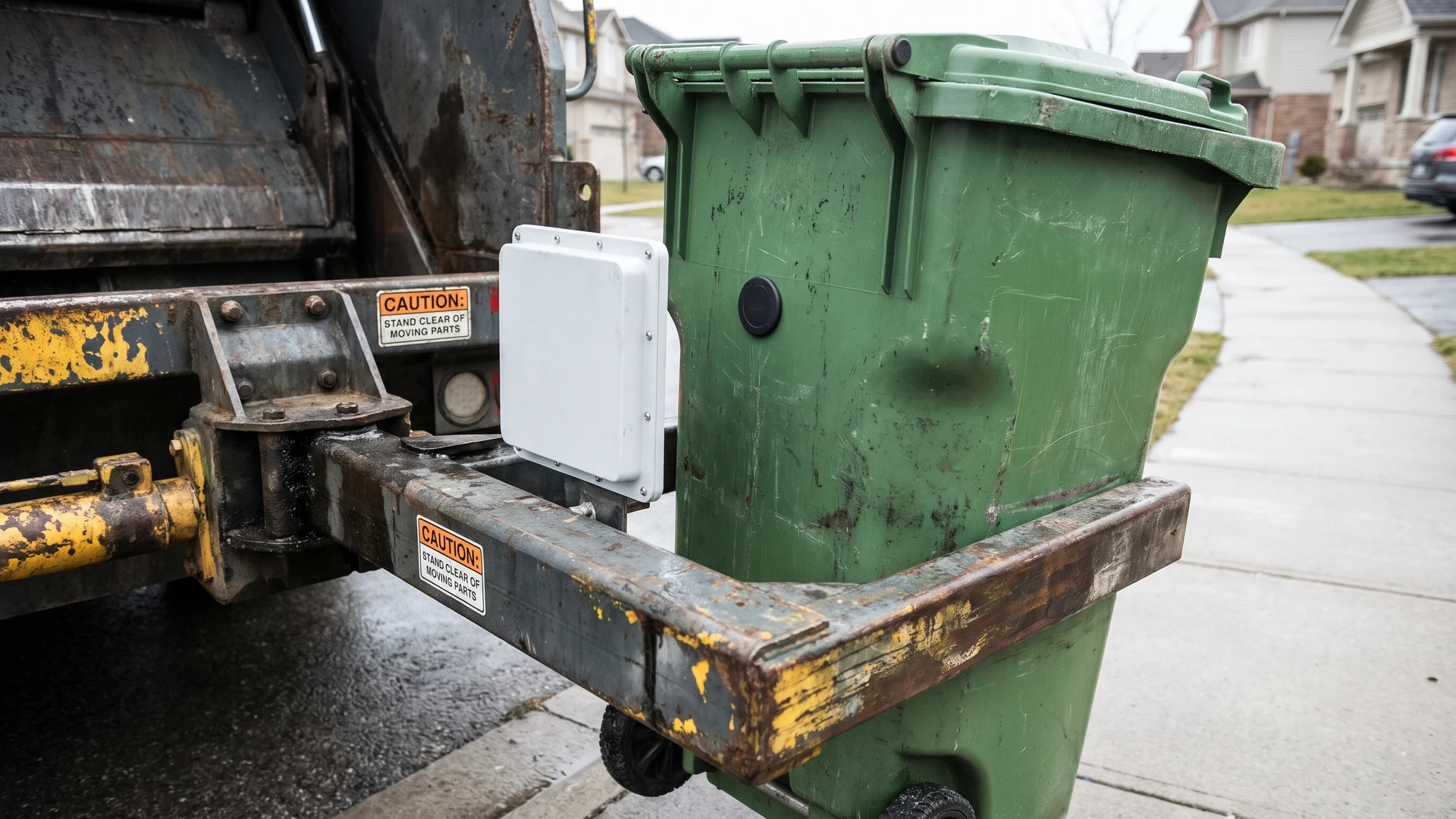
The foundation of your automated tracking begins with passive RFID tags, which are ruggedized transponders that draw power from the reader’s radio waves rather than relying on internal batteries. You typically attach these durable plastic discs or cylindrical plugs under the rim of residential bins or commercial dumpsters to withstand outdoor weather, chemicals, and mechanical shocks. Most municipal setups use Ultra-High Frequency (UHF) tags because they offer a read range of one to three meters, ensuring the truck can scan them reliably during a curbside pickup. These tags hold a unique identification number that links directly to the specific household or container profile in your system.
Vehicle mounted RFID readers
To capture the data from the bins, you must install vehicle mounted RFID readers and antennas directly onto the lifting structure of your garbage trucks. These readers emit a localized radio frequency field that activates the passive tags exactly when the hydraulic arm grabs and inverts the container. The system connects with mechanical lift sensors, which trigger the scan window to ensure the reader only captures the specific trash cart currently lifted into the air. This targeted read zone prevents accidental scans of neighboring curbside bins and guarantees your team receives accurate service logs for every single property.
Backend data processing software
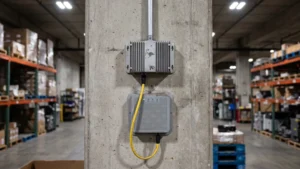
The final component is the backend data processing software, which ingests the real time field data transmitted by the onboard computers inside your collection vehicles. This centralized system receives the scanned bin identifiers, authenticates the source, and parses the timestamps and geographic coordinates into your structured databases. Your team relies on this modular architecture to clean and transform raw logs into actionable metrics like route efficiency, missed bins, and tonnage per route. By storing and validating these transactions automatically, the software empowers city managers to monitor key performance indicators through a centralized dashboard.
The data capture sequence during bin collection
Understanding the chronological steps of a collection event makes the abstract tracking technology concrete and manageable for your implementation leads. The entire data capture sequence happens in less than a second while the collection vehicle empties the container. This automated workflow ensures your team records exact service details without slowing down the driver or complicating the daily route. Walking through this sequence shows you exactly when and how data moves from the curb to your central database.
- Approach and activation: As the mechanical lift arm grabs the bin, the onboard reader emits a radio frequency signal to power the passive tag embedded in the plastic. The tag absorbs this radio wave energy instantly and broadcasts its unique serial number back to the vehicle antenna. At the exact same moment, physical lift sensors detect that a container has been engaged, which prevents the system from scanning idle bins on the pavement. This synchronized activation ensures your data collection only happens during an actual service event.
- Onboard data correlation: Once the reader captures the tag identifier, the onboard computer inside the truck receives the information and bundles it into a single digital record. The computer pairs the unique tag ID with precise geographic coordinates from a Global Positioning System (GPS) receiver and a timestamp accurate to the second. If your truck features an integrated weighing scale, the system also adds the measured weight of the waste to this localized data packet. Processing this information directly on the vehicle guarantees that temporary losses of cellular coverage do not break the link between the location and the bin scan.
- Transmission and synchronization: After the onboard computer completes the data packet, it transmits the combined record via cellular networks to your central enterprise software. The back office system receives this live feed and immediately links the bin identifier to the specific customer profile or billing account. This automated synchronization gives your dispatchers real time proof of service and allows them to address disputed missed pickups while the truck is still in the neighborhood. Your route completion dashboards update dynamically, providing your team with full visibility over the day’s collection progress.
Optimizing fleet routes with collection data
Translating raw collection data into actionable fleet management decisions helps your municipality save valuable time and reduce fuel consumption across all neighborhoods. Because your automated tracking system logs the exact time and location of every lifted bin, your dispatch team can visualize the actual paths taken by your drivers. This real time visibility highlights inefficient driving loops, unexpected delays, and areas where vehicles overlap unnecessarily during their daily assignments. By analyzing these geographical patterns, you can restructure your service zones to minimize driving distance and lower the operational costs of your waste management program.
The same collection data plays a crucial role in identifying missed bins and managing customer complaints with objective evidence. When a resident calls to report a skipped pickup, your team can check the system to see exactly when the truck passed the property and whether the bin was actually scanned. If the data shows the bin was not placed at the curb during the scheduled window, you resolve the dispute immediately without sending a costly return vehicle. This direct connection between technological deployment and daily problem solving proves the value of your investment to both staff and taxpayers.
Supporting pay as you throw billing models
Shifting a municipality to a usage based billing model requires structural reliability and completely flawless data capture. An automated tracking system acts as a reliable bridge to accurate billing, allowing you to charge residents based on the actual waste they generate rather than a flat municipal fee. This fairer financial model encourages recycling and waste reduction, but it only succeeds if your underlying technology assigns every collection event to the correct household. Building this infrastructure correctly ensures your team can handle disputes easily and maintain public trust during the transition.
Associating bin tags with resident accounts
The foundation of any usage based billing system relies on flawlessly linking every physical container to its corresponding resident account in your database. When your team deploys the new hardware, you must map the unique identifier of each tag directly to the property address and the customer billing profile. This digital association ensures that every time a truck empties a specific bin, the central software knows exactly who to charge for the service. Maintaining a clean and accurate database prevents billing errors and ensures your financial model remains structurally sound as residents move in and out of the municipality.
Logging accurate collection frequencies
With the accounts correctly linked, your onboard vehicle readers automatically log the exact frequency of collections for every participating household. Because the system records a precise timestamp every time the hydraulic arm lifts a container, your billing department receives a perfect ledger of usage without any manual data entry. This continuous stream of collection data allows you to generate invoices based on how many times a resident actually placed their bin at the curb during the billing cycle. Automating this process removes human error from the equation and guarantees that your municipality bills residents transparently and fairly.
Handling missed or unauthorized bins
Managing exceptions gracefully is just as important as recording standard collections when you transition to a usage based financial model. If a resident places an unauthorized or unpaid bin at the curb, the vehicle reader scans the tag and instantly alerts the driver or the central office that the container lacks an active subscription. Similarly, if a bin is missed due to a blocked street, the system provides a clear digital trail showing why the service could not be completed. Handling these discrepancies with hard data protects your revenue stream and gives your customer service team the exact information they need to resolve billing disputes confidently.
Steps for retrofitting existing bins with RFID tags
Adding tags to your municipality’s existing bin inventory provides a cost effective scaling strategy that avoids the massive expense of purchasing entirely new containers. This retrofit process allows your project managers to integrate the technology in manageable phases while keeping the current fleet of street-level assets in active circulation. Following a concrete implementation roadmap reassures your team that the hardware deployment will proceed smoothly and yield reliable data from day one. By standardizing your approach to installation and digital pairing, you ensure the new hardware functions perfectly with the vehicle readers.
- Surface preparation and placement: The first step in retrofitting your existing plastic containers involves selecting a consistent mounting location, such as under the front lip or inside a pre-molded slot beneath the rim. Consistency across all containers ensures that truck mounted readers can easily and reliably scan the tags during automated collection cycles. Your field crews must clean the target area with a brush or wipe to remove dirt, grease, and moisture before applying any hardware. Drying the plastic surface completely prevents heavy-duty adhesives from failing and ensures the tag remains securely attached through harsh weather and rough handling.
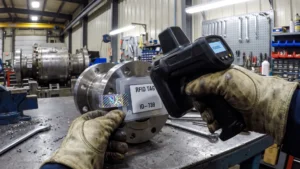
- Physical attachment of tags: Once the surface is prepared, your team secures the durable tags using industrial adhesive, mechanical fasteners, or specialized plug designs depending on the bin style. For standard bins, you can peel the backing off outdoor-grade adhesive tape and press the tag firmly onto the cleaned plastic surface. For maximum durability against the mechanical arms of the garbage trucks, you might choose to drill small pilot holes and secure the tags with pop rivets or plastic screws. Alternatively, if your legacy bins feature a pre-formed circular slot under the rim, you simply drop a specialized cylindrical plug into the nest and snap it firmly into place.
- Digital pairing and verification: After physically attaching the hardware, your field workers must pair the tag’s unique digital identifier with the container’s legacy serial number. Using a ruggedized smartphone or a handheld scanner equipped with Bluetooth, the worker scans the newly attached tag and manually enters the printed serial number of the old bin. The mobile deployment application instantly links these two numbers in a temporary local database record, capturing the geographic coordinates and a timestamp of the installation. This digital pairing is then synchronized with your central management software, ensuring that the legacy asset history merges seamlessly with the new tracking technology.
Connecting collection data to municipal software
Integrating your new tracking backend with existing municipal management software ensures your team avoids isolated data silos that complicate daily administration. The captured data from your collection routes must feed seamlessly into your current Enterprise Resource Planning (ERP) platform or customer service workflow. Modern tracking systems utilize Application Programming Interfaces (APIs) to bridge the gap between the vehicle telematics and your central databases without demanding a complete system replacement. This straightforward integration assures your technical decision-makers that the new hardware will communicate flawlessly with the infrastructure you already have in place.
Establishing a reliable data connection allows information to flow automatically from the street level directly to the screens of your dispatchers and finance officers. When a truck scans a bin, the integrated software instantly updates the customer account, verifies the service, and prepares the data for upcoming billing cycles. This unified approach eliminates the need for manual data entry and drastically reduces the administrative burden on your back office staff. By choosing tracking software that prioritizes open communication standards, you protect your technological investment and guarantee that your entire organization benefits from the newly captured operational insights.
Measuring the operational impact of your RFID rollout
Evaluating the success of your fully deployed tracking system requires a clear framework of metrics that prove the value of the implementation to city councils and stakeholders. You should begin by tracking the reduction in missed pickup complaints and the decrease in time spent resolving resident disputes, as these offer immediate proof of improved service reliability. Additionally, monitoring your fleet’s fuel consumption and route completion times will help you demonstrate a tangible return on investment from the newly optimized driving paths. Presenting these concrete operational improvements empowers your project managers to confidently showcase how automated data capture transforms municipal waste management into a highly efficient process. If your team needs further practical guides on establishing these systems, RFID & NFC operates as a neutral educational resource, and you can direct general inquiries to contact@rfidandnfc.com.
What data should we capture when a tagged bin is emptied?
Capture the Radio Frequency Identification (RFID) tag identifier, a timestamp, Global Positioning System (GPS) coordinates, and weight if the truck has scales. Include vehicle and driver details for auditing. Record the service status, such as normal, exception, or over limit. Transmit or batch sync the record to your database.
Which RFID frequency is right for municipal bins?
Choose the frequency based on read distance and environment. Low Frequency (LF, 125 or 134.2 kilohertz) typically reads 5 to 10 centimeters. High Frequency (HF, 13.56 megahertz) suits short, controlled reads. Ultra High Frequency (UHF, 860 to 960 megahertz) reaches about 1 to 3 meters for truck mounted readers.
How do vehicle mounted RFID readers avoid reading the wrong bin?
Readers create a read zone around the lift. The RFID reader and its antenna, which send and receive radio waves, mount near the hopper, the loading area, with power and angle. A lift sensor that detects arm movement triggers the read. Software uses timing and position to reject nearby bins.
How does pay as you throw billing use RFID and weight data?
Pay as you throw (PAYT) bills residents for the waste they set out. The RFID tag links the bin to the correct account, onboard scales record weight, and the timestamp with GPS proves service. Your billing system prices by weight or lift and posts charges automatically.
How do we retrofit existing bins with RFID tags?
Choose one placement so truck readers align. Clean and dry the area, attach the tag using adhesive, rivets, or a pre-molded slot called a chip nest under the rim. Use an RFID reader to read the tag, link it to the bin record, and verify it on next route.