Understanding RFID frequency bands for your project
Radio Frequency Identification (RFID) relies on specific bands of radio waves to communicate between a tag and a reader. Choosing the correct frequency band determines whether your tracking system will function reliably or fail when introduced to your actual workspace. Every physical environment presents unique challenges with materials and layout that interact differently with various radio waves. We built RFID & NFC as an educational resource to help you navigate these technical decisions without getting overwhelmed by complex jargon. By evaluating these underlying frequencies first, your team sets a solid foundation for a successful implementation that meets your specific operational needs.
Core technical differences between radio frequencies
Radio frequencies operate on different wavelengths that fundamentally alter how tags and readers communicate. You must balance distance, speed, and environmental resistance when selecting a frequency for your project. The physical properties of these waves create strict operational constraints that dictate exactly what the technology can and cannot do. Understanding these core technical differences allows you to evaluate different hardware solutions with confidence and precision.
Read range expectations
The distance at which a reader can successfully activate and communicate with a tag depends heavily on the frequency wavelength. Low Frequency (LF) and High Frequency (HF) systems use magnetic inductive coupling, which acts like a transformer and strictly limits the read range to a few centimeters or up to one meter. Ultra High Frequency (UHF) systems emit true propagating radio waves that travel through the air to reach tags up to 15 meters away. You need to map out the exact physical distances required in your facility before committing to a specific frequency band.
Data transfer rates
The speed at which information travels between the tag and the reader scales directly with the chosen frequency band. LF systems offer the slowest transfer rates, making them suitable only for transmitting tiny amounts of simple identification data. HF systems provide moderate speeds that can handle more complex data handshakes, while UHF bands deliver the highest throughput for rapid data transmission. When your operations require reading multiple items simultaneously, you must choose a higher frequency that supports fast data modulation.
Signal interference factors
Physical obstructions in your workspace will reflect, absorb, or scatter radio waves depending on the specific frequency band you deploy. Metal surfaces act like mirrors that reflect electromagnetic waves, which easily creates reading blind spots for UHF systems. Liquids heavily absorb high-frequency radio energy, meaning that water-rich environments will severely reduce the functional range of those signals. You must audit your physical space for these materials because they directly impact how well your radio waves will behave in practice.
Low frequency RFID for short range tracking
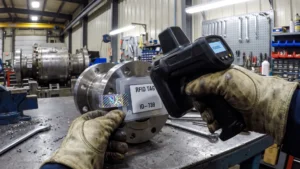
Low Frequency (LF) RFID operates between 125 kilohertz (kHz) and 134.2 kHz and excels in environments that defeat other radio waves. These systems rely on near-field magnetic coupling rather than propagating electromagnetic waves, which keeps the energy tightly focused in a localized area. This magnetic approach allows LF signals to pass directly through water, animal tissue, and mud without losing significant power to absorption. The signals can even operate reliably near thin metallic surfaces because the magnetic field remains largely unaffected by conductive materials.
While this frequency band offers superior penetration through challenging materials, it comes with strict limitations regarding distance and speed. The tight magnetic coupling restricts your maximum scanning distance to under ten centimeters, meaning the tag must be placed almost directly against the reader. The low carrier frequency also severely limits your data transfer rates to just a few kilobits per second. You will find this older and slower frequency highly reliable for niche applications where environmental resilience matters more than rapid scanning.
High frequency RFID and access control applications
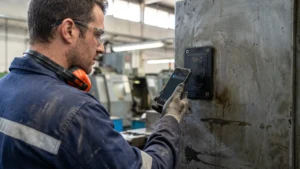
High Frequency (HF) RFID operates globally on the 13.56 megahertz (MHz) band and serves as the standard for secure identity management. Near Field Communication (NFC) functions as a specialized subset of this HF technology, sharing the same frequency but adding bidirectional communication protocols. These systems achieve read ranges up to one meter, though NFC deliberately restricts this to just a few centimeters to enforce strict physical security. This controlled proximity ensures that a credential is only read when a user intentionally presents it to the scanner.
The 13.56 MHz frequency balances moderate data transfer rates with enough processing capacity to support complex cryptographic algorithms. HF tags and smart cards feature integrated circuits that perform mutual authentication handshakes with the reader before exchanging any sensitive information. This process encrypts the data payload during transmission so unauthorized devices cannot intercept or clone your access credentials. When your project manager needs to integrate reliable physical security into existing networks, HF technology provides the strongest foundation for access control.
Ultra high frequency RFID for logistics and distance
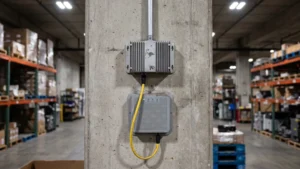
Ultra High Frequency (UHF) RFID operates between 860 MHz and 960 MHz to enable long-range scanning and rapid data capture. These systems use true radio waves to reach passive tags at distances of up to 12 meters in standard warehouse environments. The high frequency allows for wide bandwidth allocation, which translates into extremely fast data transfer capabilities across your workspace. By utilizing advanced anti-collision algorithms, a single UHF reader can cycle through and capture hundreds of individual tags per second.
This scalability makes UHF the ideal choice for enterprise leaders looking to automate supply chains and bulk inventory scanning without requiring a direct line of sight. However, these shorter radio waves are highly sensitive to physical obstructions and environmental interference. Metal surfaces reflect the signals to create dead zones, while liquids absorb the radio energy and drastically reduce the effective read range. You must carefully plan your reader placement and tag selection to mitigate these interference risks in heavy industrial settings.
Matching frequency bands to specific business use cases
Translating technical specifications into direct business applications helps you choose the right hardware for your operational pain points. Every frequency band aligns naturally with specific workflows and environmental constraints found in modern enterprises. You can streamline your final decision by mapping your primary business objective directly to the technology that best supports it. Walking through these real-world scenarios ensures your implementation solves practical problems rather than creating new technical hurdles.
Logistics and supply chain automation
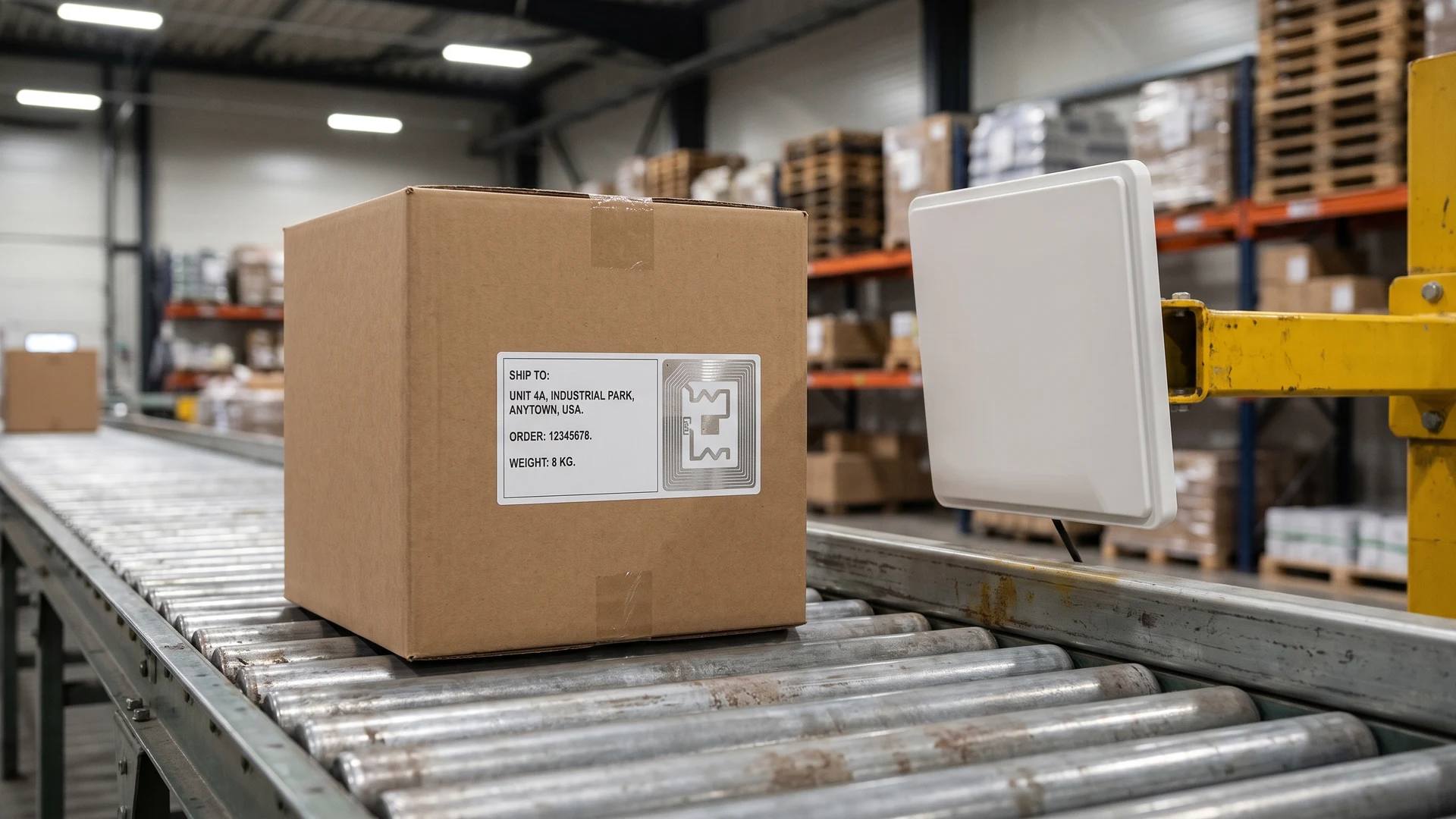
When your goal involves moving high volumes of inventory through large distribution centers, UHF systems provide the necessary scale and speed. Automated dock doors can scan entire shrink-wrapped pallets in seconds to verify shipments against inbound manifests without manual intervention. This bulk scanning capability eliminates hours of manual barcode reading and dramatically sharpens your overall inventory control. You can track products seamlessly as they move along conveyor belts, reducing human error and preventing costly stockouts.
Access control and security systems
Facilities that require secure employee authentication or cashless payment processing rely almost exclusively on HF and NFC systems. The short read range inherently prevents accidental scans and stops malicious actors from reading secure credentials from across a room. The embedded encryption chips handle complex security handshakes that protect sensitive identity data during every transaction. Your team can easily integrate these systems into existing building security networks to manage personnel movement safely.
Asset tracking in challenging environments
Industrial facilities filled with heavy machinery or liquid processing require the robust environmental resistance of LF technology. Tracking specialized tools, returnable metal containers, or livestock demands a frequency that will not bounce off steel or absorb into moisture. The localized magnetic field of LF tags ensures reliable verification even when the tag is covered in mud or surrounded by metal racks. You can deploy this technology at specific choke points to guarantee accurate asset logs in the harshest physical conditions.
How environmental factors impact your RFID frequency choice
The physical characteristics of your workspace will dictate the success or failure of your tracking implementation long before you purchase any hardware. Dense materials like concrete walls and heavy steel shelving will scatter radio waves or block them entirely, creating unpredictable scanning zones. Liquid-filled containers and high-humidity environments will absorb higher frequency signals, which starves the passive tags of the power they need to respond. Assessing these physical barriers critically helps you avoid costly deployment mistakes and hardware mismatches.
Beyond physical obstructions, you must also evaluate the invisible electromagnetic noise generated by your existing infrastructure. Heavy industrial machinery, variable frequency drives, and electrical panels emit broad-spectrum radio noise that can easily drown out weak tracking signals. You may need to install specialized shielding, adjust antenna placement, or select specialized tags to overcome this ambient interference. When you design around your real-world conditions rather than theoretical ideals, your team ensures a stable and reliable deployment.
Steps to evaluate and test your chosen RFID frequency
Deploying a new tracking solution requires a structured testing phase to guarantee the technology functions correctly in your specific facility. Moving from a theoretical plan to a physical pilot test reduces the overall risk of project failure and uncovers hidden environmental challenges. You can follow a clear, sequential process to validate your frequency choice and optimize your hardware placement before scaling up. This concrete action plan ensures your team knows exactly how to proceed with the implementation.
- Map your physical environment: Walk through your facility to identify every source of metal, liquid, and electromagnetic interference that could disrupt radio waves. Document the exact distances your system needs to cover, noting any concrete walls or heavy machinery located near your planned scanning zones. This thorough site assessment highlights potential blind spots and dictates whether you need specialized tags for harsh conditions. Gathering this physical data first prevents you from buying hardware that cannot survive your actual workspace.
- Define your data requirements: Determine exactly what information needs to move between your tags and your enterprise software during a typical operational cycle. Calculate whether you need to scan hundreds of items simultaneously on a moving forklift or just verify single secure credentials at a doorway. This evaluation confirms whether you need the rapid bulk data transfer of UHF or the secure, encrypted handshakes of HF systems. Matching your data volume to the correct frequency ensures your network will not bottleneck during peak hours.
- Run a localized pilot test: Purchase a small batch of readers and tags in your chosen frequency to deploy in a single, challenging area of your facility. Run your normal daily operations through this test zone to observe how the radio waves behave when confronted with real-world obstacles and moving personnel. Record any dropped signals, misreads, or delays to understand exactly where the system struggles to capture data. This focused trial reveals practical limitations before you commit to a massive, facility-wide rollout.
- Refine your hardware placement: Use the data from your pilot test to adjust the angle, height, and power settings of your reader antennas to eliminate blind spots. You might need to add protective shielding to nearby metal racks or switch to specialized tags to improve the response rate. Continue tweaking the physical layout until you achieve consistent, reliable reads across the entire testing zone. Once the localized setup performs flawlessly, your team can confidently scale the optimized design across the rest of the enterprise.
Finalizing your RFID frequency selection strategy
Selecting the optimal radio frequency is simply a matter of balancing your read range requirements against the physical realities of your workspace. Whether you need the robust metal penetration of LF, the secure proximity of HF, or the long-range bulk scanning of UHF, the right choice always aligns with your operational constraints. You now possess the solid, neutral educational foundation required to evaluate hardware vendors and guide your team toward a successful integration. If you have general inquiries as you finalize your strategy, you can always reach out to contact@rfidandnfc.com for further clarification.
How should I choose an RFID frequency for my environment and range needs?
Start by matching range, materials, and volume to the task. Radio Frequency Identification (RFID) at Low Frequency works at close range and tolerates metal and liquids. High Frequency suits short reads and secure cards. Ultra High Frequency reaches furthest and enables bulk reads, but placement near metal and water matters.
What read range is typical in real deployments?
Radio Frequency Identification (RFID) range depends on frequency, antennas, power, and environment. Low Frequency reaches up to 10 centimeters. High Frequency reaches up to 1 meter, usually less. Ultra High Frequency delivers 3 to 12 meters with fixed RFID readers and up to 10 to 15 meters when tuned.
Will RFID work near metal or liquids?
Yes, Radio Frequency Identification (RFID) can work near metal or liquids, but frequency choice matters. Low Frequency handles water and metal best at short range. High Frequency is moderately affected and suits cards and labels. Ultra High Frequency is sensitive, use on-metal tags or liquid-safe options and test placement.
How do Ultra High Frequency RFID systems read many tags at once in warehouses?
Radio Frequency Identification (RFID) at Ultra High Frequency reads tags using backscatter, which reflects reader signal, and anti collision algorithms that prevent talk over. The RFID reader powers passive tags, then sequences replies in slots. You get reads without line of sight. Near metal, adjust antenna and use on-metal tags.
When is 13.56 megahertz technology the right choice for access control or payments?
High Frequency (HF) at 13.56 megahertz underpins Near Field Communication (NFC) and secure cards. You get a tap range of 0 to 10 centimeters with encryption and mutual authentication, a challenge and response check. This suits access control and payments. It is not designed for long range or bulk reads.