Improving food supply chain compliance with automated tracking
Radio frequency identification (RFID) replaces fragmented manual checks with automated tracking to ensure continuous food quality and compliance. When your team installs automated readers at physical handover points, your system captures location data instantly without requiring staff to stop and scan barcodes. This technology provides project managers with an accessible way to integrate reliable data collection directly into daily operations. You can gain complete visibility over your inventory movements while continuing to use your current warehouse layout and shelving structures.
Tracing products from producer to retailer
Food items move through a complex network of producers, distributors, and retailers before they reach the final consumer. When you track products using continuous automated readers, your system captures location data at every single physical handover point along this journey. This continuous visibility creates a reliable audit trail that replaces the fragmented records generated by manual scanning methods. Your project leads can manage complex logistics more effectively when they have an accurate picture of where every item sits in the supply chain at any given moment.
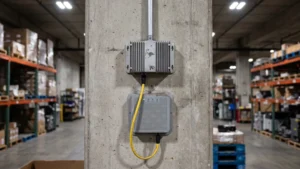
The technology works by recording a timestamp and location update every time a tagged pallet or carton passes through an automated dock door. Your warehouse staff no longer need to manually record goods received, which reduces human error and accelerates the movement of perishable items. This automated approach ensures that your compliance records remain unbroken across different physical spaces and transport legs. You can confidently prove the custody chain of your products because the tracking data reflects real-time physical movements rather than manual data entry.
Mapping practical data flows across your operations
Understanding the actual movement of data helps you see exactly what hardware and software infrastructure you need for your operations. When a tagged item passes a reader, the hardware transmits that unique identifier directly to a central database or middleware system. This connection between the physical hardware and your existing software backbone demystifies the technical side of automated tracking. You can maintain your current enterprise systems while routing this new layer of location data to the dashboards your team already uses.
Capturing data at goods receipt
The data flow begins the moment a shipment arrives at your receiving dock and passes through an automated reader portal. The reader energizes the tags on the incoming pallets and captures hundreds of unique product identifiers in a fraction of a second. This information flows immediately into your local server or cloud network to verify the delivery against your expected purchase orders. Your team can process incoming stock much faster because the physical receipt of goods automatically triggers the digital confirmation process.
Updating inventory records automatically
Once the incoming data reaches your central software, your system automatically updates your main inventory records without any manual input. This digital handover ensures that your stock levels reflect reality at all times to prevent discrepancies between your warehouse floor and your database. Your project managers can monitor real-time stock availability and make informed decisions about storage capacity or outgoing shipments. This continuous flow of information keeps your operational data accurate and accessible to anyone who needs to manage inventory.
Sharing visibility with supply chain partners
Your internal tracking data becomes even more valuable when you route it securely to your external supply chain partners. You can configure your software to share specific location updates and timestamps with distributors or retailers as soon as a shipment leaves your facility. This shared visibility builds trust across the network because everyone operates from the same accurate set of automated records. Your partners can plan their own receiving schedules more efficiently when they have reliable data about when your products will arrive.
Monitoring cold chain conditions with specialized tags
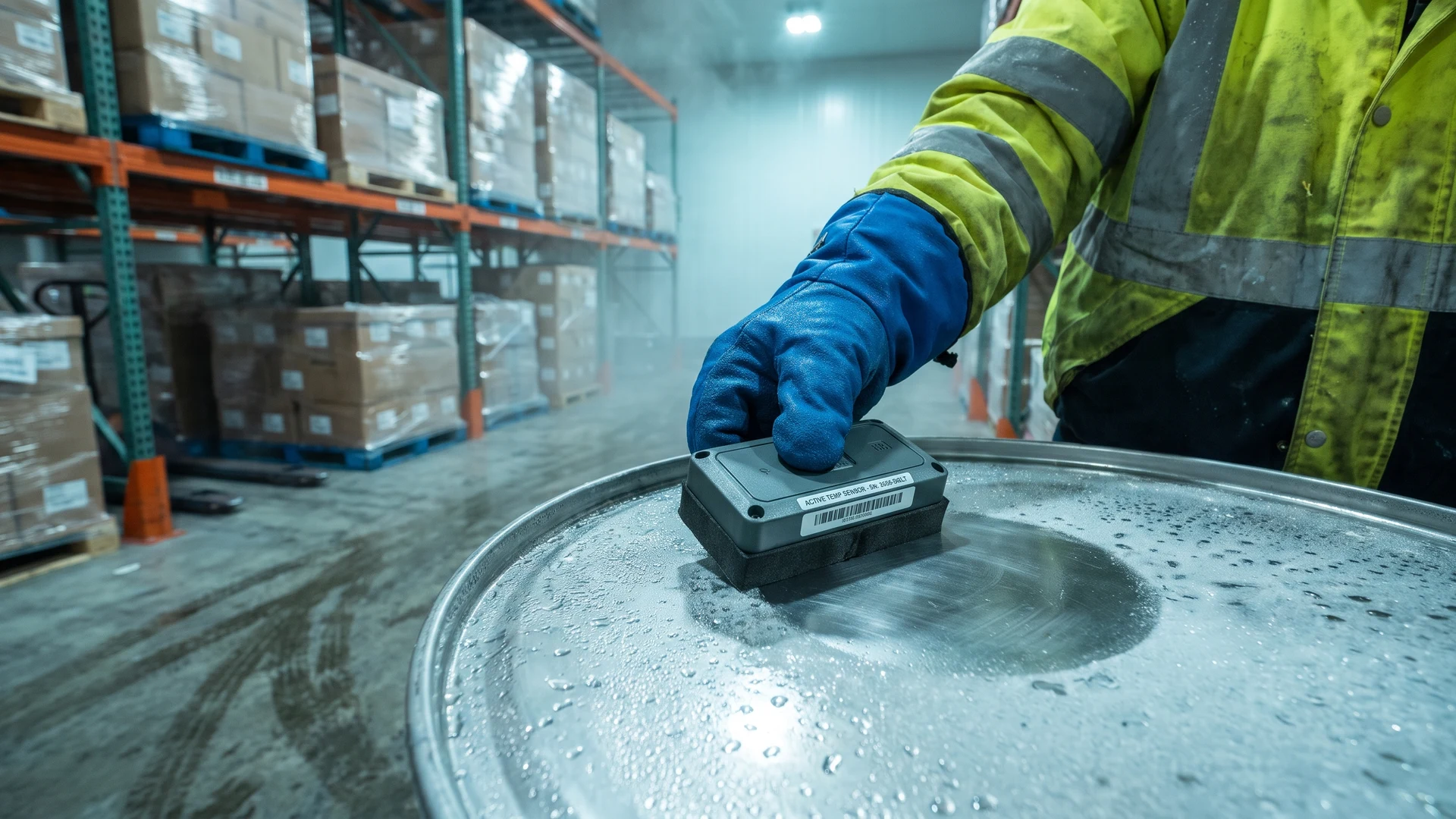
Specialized sensor tags provide a reliable way to monitor the temperature of perishable goods during transit and storage. These active RFID tags contain internal batteries and temperature sensors that record the ambient conditions at preset time intervals. The integrated microchip saves each temperature reading alongside a timestamp directly into the tag’s onboard memory bank. You can use these automated logs to prove that your food items remained within safe temperature ranges without relying on manual thermometer checks.
If the temperature drops below or rises above your safe lower or upper limits, the sensor tag immediately records a threshold violation. When the tagged shipment passes an automated reader at your receiving dock, the system uploads the entire stored temperature history to your backend database. This real-time data retrieval gives you concrete evidence to support your quality control parameters and food safety compliance requirements. Your team can quickly identify thermal stress events and take corrective action before a compromised product enters your main storage facility.
Simplifying product recall processes
When a food safety issue occurs, granular item-level tracking data allows you to execute highly targeted product recalls. Because your system records the exact journey and location of every specific carton, you can identify the specific batch affected by a contamination event. This precision means you no longer have to pull entire product lines from the shelves out of an abundance of caution. Your team can isolate the specific compromised items quickly, which protects public health while minimizing the financial impact on your operations.
Having access to a complete digital audit trail transforms a chaotic recall scenario into a manageable and data-driven process. Project managers can rely on this automated historical data to trace a problematic ingredient back to its source and forward to its current location. This safeguard justifies the investment in automated tracking by significantly reducing the operational risks associated with food distribution. You can protect your company’s reputation effectively when you demonstrate to regulators and customers that you have total control over your inventory.
Choosing the right tags for food environments
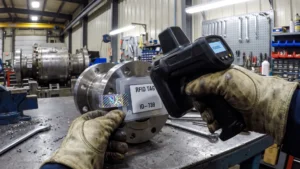
Selecting the right physical hardware ensures that your tracking system functions reliably in demanding food processing and storage environments. Standard tags often fail when exposed to moisture, extreme cold, or metallic surfaces, which leads to frustrating signal losses and incomplete data. You must evaluate the specific physical conditions of your facility to choose tags engineered to survive those exact environmental stresses. Understanding how these factors affect radio frequencies prevents costly implementation mistakes and keeps your project on track.
Handling moisture and liquid contents
High-moisture food items like fresh produce and meat naturally absorb ultra-high frequency (UHF) radio waves, which significantly reduces your reader’s ability to capture data. Condensation that forms when you move products from cold storage into warmer areas also creates a water layer that blocks the backscattered signal. To overcome this interference, you need specialized tags designed specifically for liquid-filled containers or high-humidity cold chains. You can also mount your labels using a small foam spacer to create an air gap that prevents the liquid from directly absorbing the electromagnetic energy.
Surviving freezing temperatures
Standard label adhesives become brittle and lose their stickiness when exposed to standard freezers or blast chilling environments. To ensure your tags remain attached, you must specify low-temperature rubber-based adhesives that stay flexible and maintain strong bonds on frosted surfaces. The tags should also feature resilient polymer face materials that resist thermal shock and prevent the label from warping or cracking in the cold. Additionally, the internal antennas must utilize flexible conductive metals that can accommodate thermal contraction without breaking the internal wire connections.
Working around metal packaging
Metal packaging like aluminum cans or steel drums severely disrupts readability by reflecting incoming radio waves and creating destructive dead zones. When you place a standard tag directly on a conductive metal surface, the material alters the electrical impedance and shifts the tag’s operating frequency. You can solve this problem by selecting specialized metal-mount tags that incorporate an electromagnetic isolation barrier, such as a ferrite material. These engineered barriers lift the antenna away from the metal surface, which allows the tag to receive power and transmit data normally.
Integrating tracking data with your existing systems
A primary concern for many project leads is how to connect thousands of automated tag reads to their current enterprise software. You do not need to replace your existing warehouse management systems to achieve comprehensive compliance tracking. Instead, you deploy specialized software called middleware, which acts as a bridge between the physical hardware readers and your central database. This middleware filters and processes the raw tag data to ensure that your main system only receives relevant information like inventory updates and location changes.
Using middleware allows you to establish standard integration paths without committing to entirely new proprietary software platforms. Your IT team can use application programming interfaces (APIs) to route the filtered tracking data directly into the dashboards your staff already use every day. This approach minimizes disruption to your daily operations because your warehouse workers continue to interact with the familiar software interfaces they know. As a neutral educational resource, RFID & NFC always recommends mapping these data connections early to ensure a smooth transition.
Steps for deploying your compliance tracking solution
Deploying a new compliance tracking system requires a structured approach to prevent overwhelming your team and disrupting your daily operations. You can ensure a successful rollout by breaking the project down into manageable and sequential phases that build confidence at every step. This roadmap gives project managers a clear path from initial testing to full integration across the entire facility. Following these concrete steps helps you evaluate the hardware accurately and adapt the technology to your specific warehouse environment.
- Map your physical processes: Begin by identifying exactly where your current manual checks cause delays or create compliance gaps. You should walk the warehouse floor to document every key handover point, such as receiving docks, packing stations, and cold storage entrances. This mapping exercise highlights exactly where automated readers will provide the most immediate operational value.
- Run a focused pilot test: Select a single product line or a specific operational area to test your chosen hardware and software combination. You can monitor how well the tags survive your physical environment and verify that the middleware accurately communicates with your central database. This controlled test allows you to resolve any signal interference issues before you commit to a larger installation.
- Train your operational staff: Introduce the new automated processes to the warehouse team well before the full system goes live. You should explain how the technology removes the burden of manual scanning and clearly demonstrate how to handle tagged items correctly. Building staff confidence early ensures that your team embraces the new workflow rather than reverting to old habits.
- Execute the full rollout: Expand the system across your remaining product lines and facility zones based on the successful results of your pilot phase. You can now activate the automated compliance reporting features and begin sharing real-time visibility data with your supply chain partners. Continuing to monitor the system performance allows you to make minor adjustments as your operational volume grows.
Building a safer supply chain for the future
Implementing automated compliance and quality control fundamentally strengthens how you manage your supply chain and protect your end consumers. By replacing manual paperwork with continuous digital tracking, your team gains the accurate data needed to prove regulatory compliance instantly. You now have the practical knowledge required to evaluate the right tags, position your readers, and connect the resulting data to your current software infrastructure. If you have general inquiries about structuring your implementation plan, you can reach out to contact@rfidandnfc.com as you begin your internal evaluation process.
How does RFID improve traceability across a food supply chain?
Radio Frequency Identification (RFID) improves traceability by giving each item a unique identity. An RFID reader, a device that powers and reads tags, captures that identity at handoff points. Your system stores events with time and location. These records build a chain of custody for audits, recalls, and quality checks.
What do RFID temperature sensor tags record, and how is the data used?
RFID temperature sensor tags record temperature readings with timestamps in onboard memory. In a cold chain, a temperature controlled supply network, they also flag threshold excursions. When an RFID reader collects the tag, your system uploads the history. You can prove compliance and trigger corrective action before product quality slips.
Which tag types work best around liquids, metals, and freezing conditions?
Liquids and metal disrupt Ultra High Frequency (UHF) signals by absorbing or reflecting energy. Use metal mount or liquid tolerant tags, and create a small air gap. For close range checks, Near Field Communication (NFC) is more stable. Select adhesives and materials rated for low temperatures so labels stay attached.
How should we design data flows from RFID readers into quality and recall processes?
Record each read as an event that links product identity, time, location, and handler. Store events in a repository tied to batch and temperature history. Set rules that trigger alerts for excursions or gaps. Connect to a Warehouse Management System (WMS) and Enterprise Resource Planning (ERP) so recalls use data.
How do we balance battery life and logging detail for active cold chain tags?
Define the minimum data you need, because each extra reading uses energy and memory. Active tags are battery powered, log on their own, and last longer when you reduce sampling and transmit less often. Cold lowers battery capacity. Choose overwrite or stop on full, then test against your longest trip.