Improving healthcare workflows with tracking technology
Introducing a tracking system into your clinical setting helps project managers solve the daily challenge of locating essential resources. Your clinical staff often lose valuable time searching for available beds, clean equipment, or specific medications during critical moments. When you deploy a structured tracking solution, you remove these operational bottlenecks without disrupting the established routines of your busy hospital wards. This technology works quietly in the background, which gives your nurses and doctors more time to focus directly on patient care.
Enhancing patient safety through smart wristbands
Connected wristbands provide a reliable method for identifying patients and verifying their treatment plans at the bedside. When your team uses these smart tags, they create a digital link between the physical patient and their medical history. This digital connection helps reduce medical errors during care, because staff can instantly confirm identity before administering any treatments. Your nurses simply scan or read the patient’s wristband, and the system matches the individual against the scheduled procedure or medication list.
Integrating these identifiers with your existing Electronic Health Record (EHR) system ensures that data flows seamlessly across your facility. An EHR is the digital version of a patient’s paper chart, and linking it to smart wristbands gives your staff real-time access to accurate health data. The reliability of this connection means your clinicians do not have to rely on manual data entry or double-checking handwritten notes. You build a safer environment for care delivery, you eliminate dangerous identification mistakes, and you simplify the daily workflow for your medical personnel.
Managing medication tracking and inventory control
Automated tracking solutions improve pharmacy workflows by replacing manual stock counts with precise digital oversight. Your pharmacy staff manage thousands of critical items daily, and implementing tracking technology helps them control stock levels accurately. By eliminating the need for constant physical counts, you save valuable time for your clinical team and reduce the risk of stockouts. A solid inventory management approach ensures that your facility always has the right medications available when patients need them.
Automating daily inventory counts
Your automated dispensing cabinets connect directly to your inventory management databases to keep stock counts perfectly synced in real time. An automated dispensing cabinet is a secure storage device that dispenses medication and logs every transaction automatically. Every time a pharmacist or nurse removes a dose, the built-in scanner reads the item and deducts it from your central inventory database. This immediate update process automatically triggers replenishment orders when stock drops below a certain threshold, which keeps your pharmacy running smoothly.
Monitoring product expiration dates
Monitoring expiration dates effectively requires your automated systems to track the exact shelf life of every medication in your facility. Your tracking software logs the expiration dates and lot numbers linked to specific storage pockets when staff load the cabinets. The system automatically flags near-expired or recalled items, which prevents your team from administering unsafe medications to patients. However, you must ensure that your storage environments remain stable, because fluctuations in temperature or humidity can degrade active ingredients before the printed expiration date arrives.
Preventing unauthorized access
Securing your pharmacy inventory prevents unauthorized individuals from accessing high-risk controlled substances or tampering with essential medications. Hospital pharmacies store valuable narcotics that require strict protection to maintain legal compliance with health authority regulations. By using restricted entry systems and role-based software permissions, you stop unapproved staff from handling sensitive drugs. This strict access control safeguards your patients from receiving altered treatments and protects your digital inventory records from fraudulent modifications.
Locating critical medical equipment across the hospital
Tracking high-value medical assets helps your staff find critical items like infusion pumps, portable monitors, and wheelchairs instantly. In a busy healthcare setting, shared equipment constantly moves between different departments and patient rooms. A Real-Time Location System (RTLS) solves this problem by continuously broadcasting the exact position of these mobile assets across your entire building. An RTLS is a network of hardware and software that identifies and tracks the location of objects in real time.
Having reliable data on equipment availability eliminates the operational bottlenecks that occur when nurses spend time searching for missing devices. You can view a live dashboard that displays the exact floor plan and the current location of every tagged machine. When your team knows exactly where to find an infusion pump, they can deliver care faster and reduce patient wait times. This immediate visibility improves your daily operations, protects your expensive capital investments, and ensures your clinical staff have the tools they need.
Understanding typical healthcare system architecture
Building a functional tracking environment in a complex hospital layout requires a clear understanding of the underlying technical components. Your architecture consists of edge hardware tags, wireless network readers, positioning software, and enterprise system integrations. By breaking down these layers, you can see exactly how the new hardware connects smoothly to your current IT infrastructure. This modular approach reassures your technical decision-makers that you can add tracking capabilities without replacing your existing software systems.
Selecting appropriate hardware tags
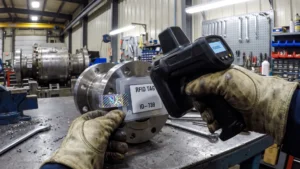
You must choose between active tags and passive tags based on your specific spatial requirements and the value of your equipment. Active tags contain an internal battery that broadcasts signals over long distances, making them ideal for tracking high-value mobile assets across multiple floors. Passive tags do not have a battery and rely on the energy from a nearby reader, which makes them perfect for short-range detection at specific doorways. You will find that active tags cost more but provide continuous location data, while passive tags offer an inexpensive way to track thousands of smaller instruments.
Placing network readers strategically
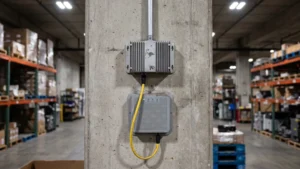
Strategically placing your network readers ensures that your tracking system captures accurate location data despite the physical obstacles in your facility. Thick walls, lead-lined rooms, and heavy diagnostic gear create signal interference that can block the transmissions from your hardware tags. To maintain reliable coverage, your engineers must install a higher density of readers and use directional antennas that bypass corridor noise. Proper placement helps you avoid dead zones near magnetic resonance imaging machines or portable X-ray units, which keeps your location data consistent and accurate.
Integrating with existing software
Modern platforms use standardized Application Programming Interfaces (APIs) to push location updates safely into your existing digital workspace. An API is a set of rules that allows different software applications to communicate with each other automatically. Many tracking dashboards embed directly into your current digital interfaces, so your staff do not have to switch windows to see live floor maps or bed availability. This direct integration ensures that your location data always matches the patient records in real time.
Addressing privacy considerations and data security
Protecting sensitive patient data requires your team to implement strict security precautions when using wireless tracking technologies. Wireless networks can expose your health transmissions and personal identifiers to unauthorized individuals if you do not secure the connections properly. Data encryption solves this problem by transforming your sensitive health information into unreadable text that only authorized users can unlock with a cryptographic key. By applying end-to-end encryption to your devices, you ensure that intercepted data remains completely useless to anyone listening on the outside.
Segmenting your hospital network provides an additional layer of security by dividing your infrastructure into isolated digital zones. Network segmentation stops a potential threat from moving freely across your connected systems, which protects your life-support machines and clinical monitoring tools. If a malicious actor breaches one tracking tag, the isolated zones prevent them from accessing your central patient databases. Following these objective educational guidelines helps you navigate regulatory compliance and secures your sensitive health information during transit.
Planning a successful pilot program on a single ward
Testing the technology in a real clinical setting requires a structured pilot program before you attempt a full hospital rollout. Running a local test allows your implementation lead to validate the system and refine daily workflows without overwhelming your entire facility. You can gather direct feedback from your nursing staff to ensure the hardware actually supports their daily routines. This controlled approach proves that the concept works in your specific environment and helps you secure the necessary buy-in from your team.
- Defining the success criteria: You must establish clear performance metrics before you deploy any hardware onto the hospital ward. Your team should identify exactly what improvements you want to see, such as a reduction in time spent searching for infusion pumps. Measuring these specific data points gives you objective evidence to evaluate whether the tracking system meets your operational goals. This step ensures that your pilot program remains focused on solving real problems rather than just testing new technology for the sake of it.
- Training the frontline staff: Educating your nurses and technicians ensures that the people using the system understand exactly how it benefits their daily work. You should conduct hands-on training sessions to show them how to read the smart tags and navigate the new digital dashboards. Listening to their initial concerns allows you to adjust the software interface and improve the overall user experience immediately. Building this early confidence prevents resistance to the new tools and guarantees a smoother transition when you expand the rollout later.
Scaling the system across the broader facility
Expanding your tracking solution across the rest of the organization requires you to evaluate the results of your pilot program carefully. You can take the lessons learned from your initial ward and apply those successful workflows to other departments. Your implementation team must review the data on network reliability, hardware durability, and staff adoption to prepare for a hospital-wide deployment. By framing your next logical decisions around these proven results, you build long-term confidence and ensure a seamless rollout across your entire facility.
How do RFID patient wristbands improve patient safety?
With RFID patient wristbands, you reduce identification errors at the bedside. Radio Frequency Identification, or RFID, pairs a tiny tag with an RFID reader to share a unique ID. Linked to the Electronic Health Record, or EHR, that ID drives automatic medication and procedure checks.
What does a typical hospital Real-Time Location System look like?
A Real-Time Location System, or RTLS, combines tags, readers, a location engine, and dashboards. Tags on your people and equipment transmit to readers, and the engine maps signals to rooms. Dashboards connect to the Electronic Health Record, or EHR, so your beds and tasks update automatically.
When should we choose active tags over passive tags for equipment tracking?
Choose active tags when you need continuous, building-wide visibility of mobile equipment. An active tag has a battery that broadcasts for longer range, with life of roughly 2 to 7 years. Use passive tags for your doorway checkpoints and audits, since they have no battery and are maintenance free.
How do we protect patient privacy in an RFID rollout?
Encrypt data in transit and at rest, turning records into unreadable text without the correct key. Enforce role-based permissions and keep audit logs to control and trace access. Segment your network so tracking devices are isolated from other clinical systems.
What is the best way to run a ward pilot and measure results?
Scope one workflow and pick metrics that matter, such as find time and scan compliance. Walk the ward to place RFID readers away from interference, then tag a small pilot set. Connect to your Electronic Health Record, train champions, run four weeks, and compare to baseline.